The Construct
The Default Mode Network
If you put a person in an MRI scanner and tell them to "do nothing," their brain does not go quiet.
Instead, a specific network lights up like a Christmas tree.
This is the Default Mode Network (DMN).
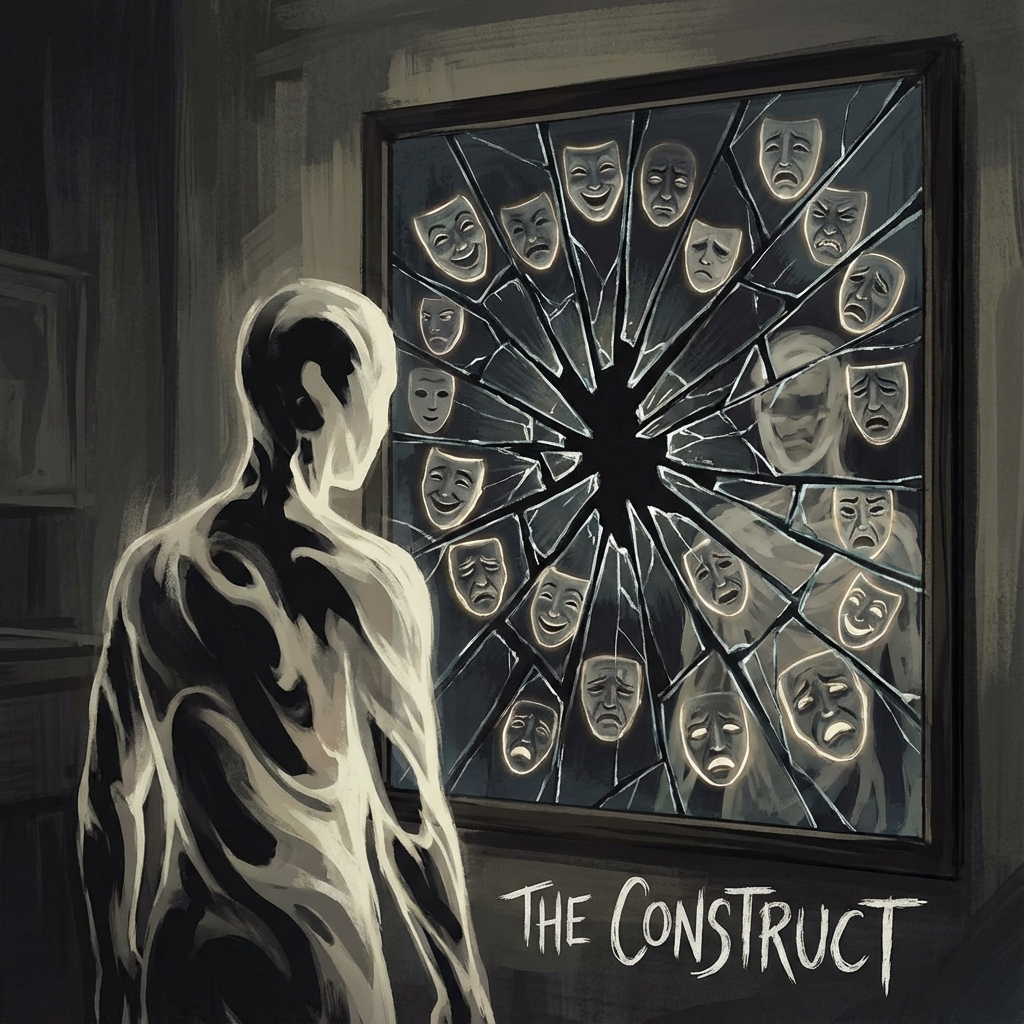
It is the seat of the Ego.
The DMN is responsible for "Self-Referential Processing" (thinking about Me). It constantly rehearses the past and simulates the future to update your social status.
It is the "Narrator" in your head that never shuts up.
Narrative vs. Experiential Self
You have two selves:
1. The Narrative Self (DMN): The story. "I am a doctor, I was born in 1980, I am anxious about tomorrow." It lives in Time (Past/Future).
2. The Experiential Self (TPN): The sensor. The raw feeling of cold water, the taste of coffee, the flow of running. It lives in the Now.
They are anti-correlated. When you are fully immersed in a task (Experiential/Flow State), the DMN shuts down. The Ego vanishes. You don't "lose yourself" in the work metaphorically; you lose yourself neurobiologically.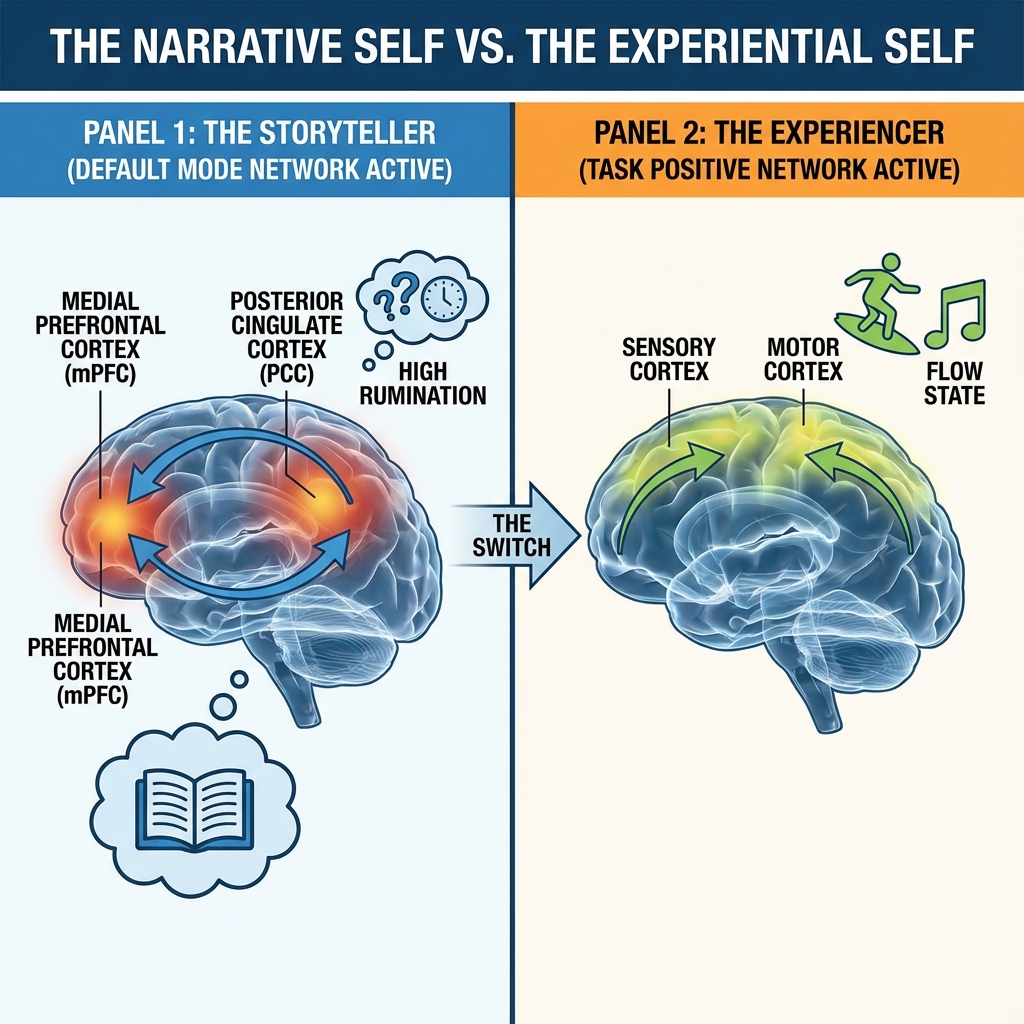
The Psilocybin Effect
Why do psychedelics cause "Ego Dissolution"?
Because they cut the blood flow to the DMN.
When the DMN goes offline, the boundary between "Me" and "Not Me" dissolves. You feel one with the universe because the neural circuit that creates the distinction has been temporarily unplugged.
The Inheritance of Perspective
The Ego is a useful servant but a terrible master. You need it to pay taxes and remember your name. But you do not need it to taste a strawberry or love a child. In fact, it gets in the way.
---
[!TIP]
Clinical Context: Dissociation vs. Transcendence
>
1. Dissociation: Checking out. Numbing. The DMN is still active, but the emotion is suppressed. This is a defense mechanism (Freeze response).
2. Transcendence: Checking in. The DMN is silent, but awareness is hyper-vivid. You are not escaping reality; you are merging with it.
3. The Test: Dissociation feels like fog. Transcendence feels like HD clarity.