The Observer
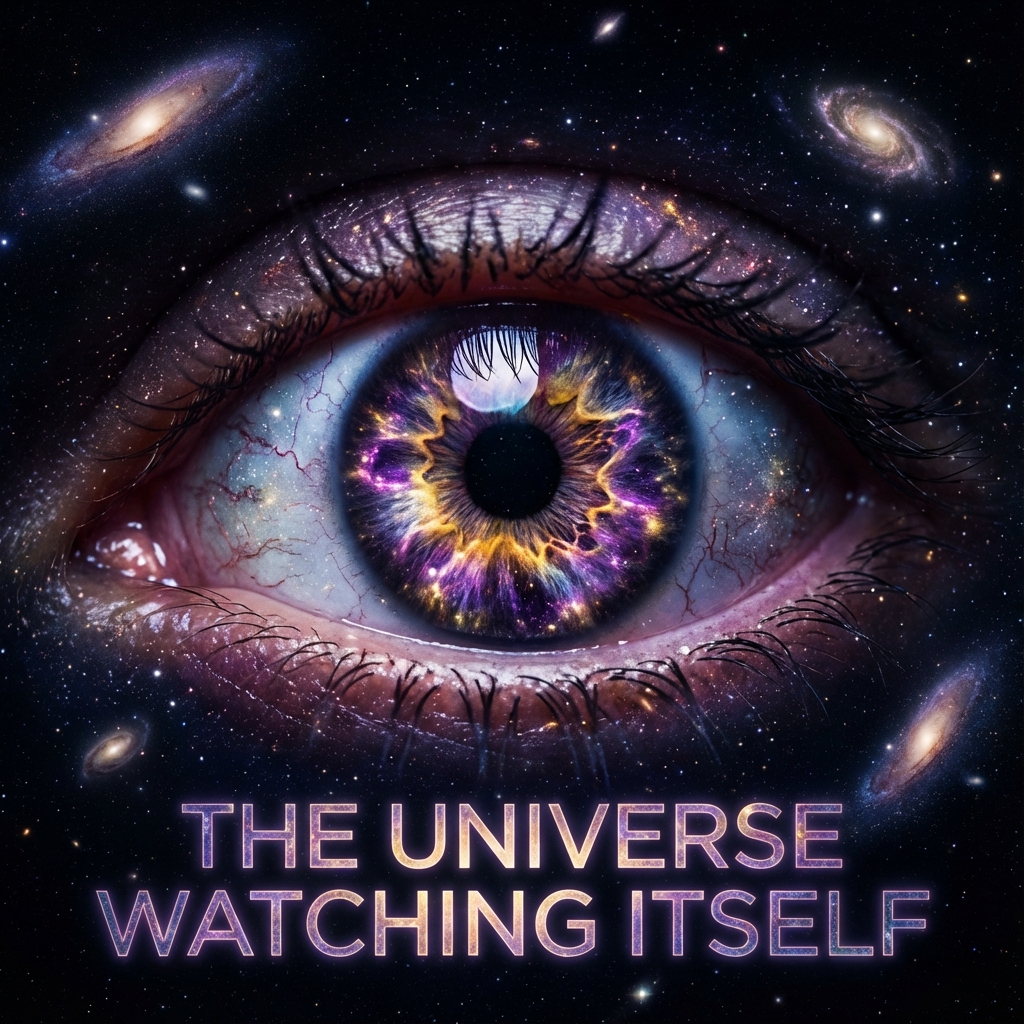
The Eye that Cannot See Itself
You have thoughts. "I am hungry." "I am worried."
Who is aware of those thoughts?
You have feelings. "I am sad."
Who feels the sadness?
If you can watch your thoughts, then you are not your thoughts. You are the Observer.
In Eastern traditions, this is Sakshi (Sanskrit: "The Witness"). In neuroscience, it is meta-awareness or core consciousness.
Consider a cinema screen. A tragedy plays. Then a comedy. The screen does not laugh or cry. It simply holds the space for the light to dance.
You are the screen.The Neuroscience of Meta-Awareness
What is the Observer neurologically?
1. Interoceptive Awareness (Insula)
The anterior insula processes signals from the body (heartbeat, breath, gut). It is the brain's "feeling sensor."
Mindfulness training (MBSR, Vipassana) strengthens insular activation. Practitioners develop heightened awareness of bodily states without reacting to them. This is the Observer stance: noticing without identifying.2. Core vs. Extended Consciousness (Damasio)
Antonio Damasio distinguishes:
Core Consciousness: The wordless feeling of being present, alive, existing now*. This is the Observer.- Extended Consciousness: The autobiographical self, with memories, plans, narratives. This is the Self-Model (Chapter 4).
The Observer is pre-verbal, pre-narrative. It arises from brainstem-thalamus-insula circuits, not prefrontal cortex. It is the "feeling of existence" before you label it "I am John."
3. Witness Consciousness vs. Default Mode Network
The Default Mode Network (DMN) generates the Self-Model—the story of "me." It is the movie.
The Witness is not a network in the same sense. It is the absence of identification with DMN activity. When you meditate and "watch your thoughts," you are disidentifying from the DMN output.
Neuroimaging studies (Tang et al., 2015; Brewer et al., 2011) show experienced meditators have:- Reduced DMN activity during meditation.
- Stronger executive control (ability to disengage from rumination).
Trauma and the Observer: Avoiding Victim-Blaming
The statement "Trauma affects the movie, not the screen" is philosophically accurate but ethically dangerous if misinterpreted.
The Risk:
It could be read as: "If you're the screen, trauma doesn't really hurt you. Just detach!"
This is victim-blaming spiritual bypassing. It ignores the fact that trauma physically changes the brain—amygdala hyperactivity, hippocampal atrophy, PFC shutdown. The Observer stance is a skill that must be cultivated; it is not a pre-existing immunity.
The Clarification:
- Trauma absolutely affects you. It alters the substrate (the brain), which changes the movie.
- The Observer stance is a therapeutic tool, not a denial of suffering. It allows you to process trauma without being consumed by it.
The Integration: The Unmoved Mover
When you identify as the movie (the drama of your life), you suffer.
When you identify as the screen (the Observer), you find equanimity.
But this is not dissociation. Dissociation is numbness, disconnection, avoidance. The Observer is full presence without identification.The Inheritance of Perspective
Witness Consciousness (Sakshi) functions as a stable meta-cognitive platform, independent of limbic fluctuation. By stabilizing the position of the Observer, the system can process high-valence data (trauma, fear) without structural destabilization. The screen remains unaffected by the projection.
---
[!NOTE]
Clinical Context: The Cortex Protocol
In clinical practice, we observe that the Observer stance is often inaccessible until neurological healing occurs:
1. Stabilize: Treat hyperactive amygdala/HPA axis first.
2. Cultivate: Then teach Observer practices (meditation, mindfulness).
>
Therapeutic Tools:
* rTMS (Transcranial Magnetic Stimulation): Can be used to downregulate DMN activity (1 Hz to mPFC) or upregulate executive control (10 Hz to DLPFC).
* Risks: Seizure (~0.1%), headache, or mania induction in bipolar patients.
Informed Consent: Patients must retain agency; we create the possibility* of the Observer, but the patient must choose to occupy it.