The Shape
Sthira Sukham Asanam
In the Yoga Sutras, Patanjali mentions "Asana" (Posture) only once:
"Sthira Sukham Asanam" (The posture should be steady and comfortable).He was not talking about headstands. He was talking about sitting still.
Asana is not gymnastics; it is the bio-mechanical process of preparing the body to handle high-voltage energy without blowing a fuse. You untie the knots (stiffness) so the current (Prana/Nerve Signal) can flow.
The Vagus Switch
Why does yoga relax you? It is mechanical.
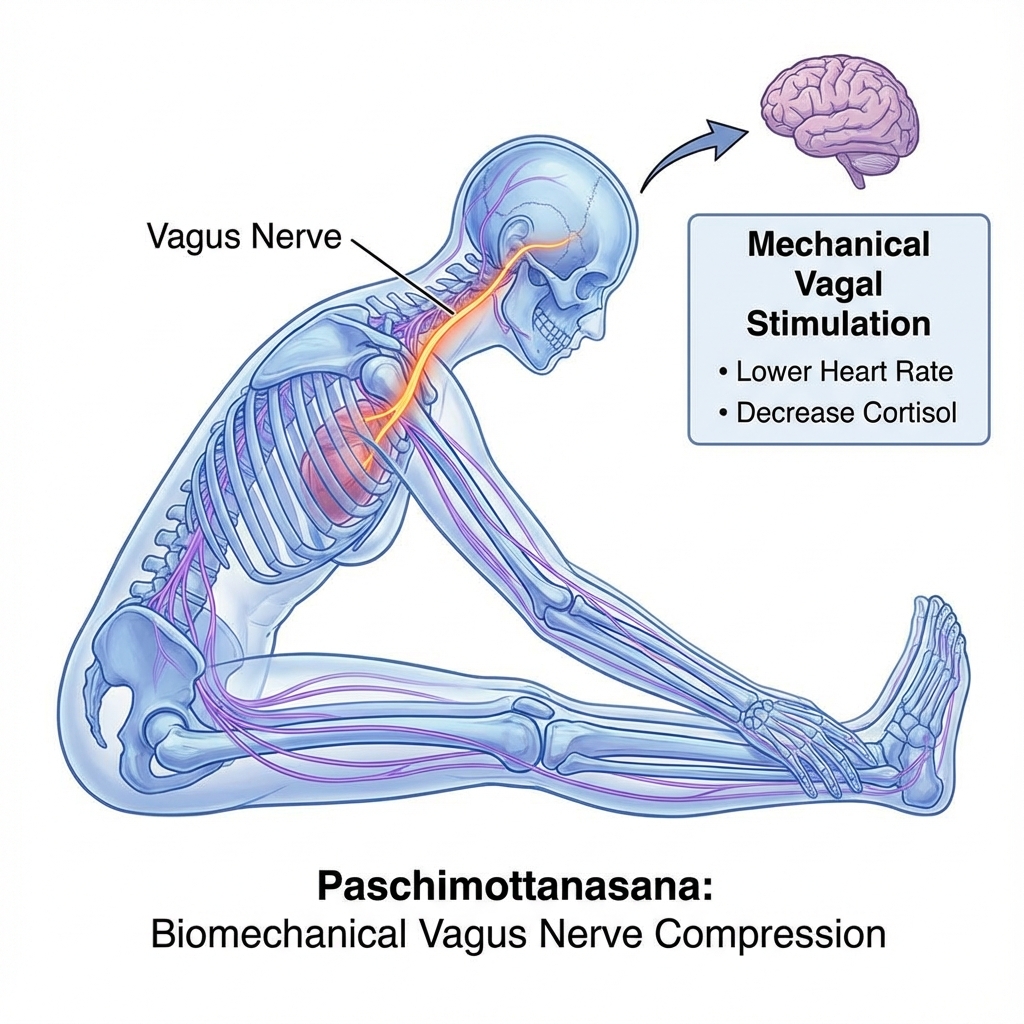
- Forward Folds (Paschimottanasana): You physically compress the Carotid Sinus in the neck and the abdominal Vagus nerve.
- The Baroreflex: This compression signals high pressure to the brain. The brain responds by instantly lowering blood pressure and heart rate.
You are manually hacking the "Rest and Digest" system through geometry.
Fascia: The Subtle Body
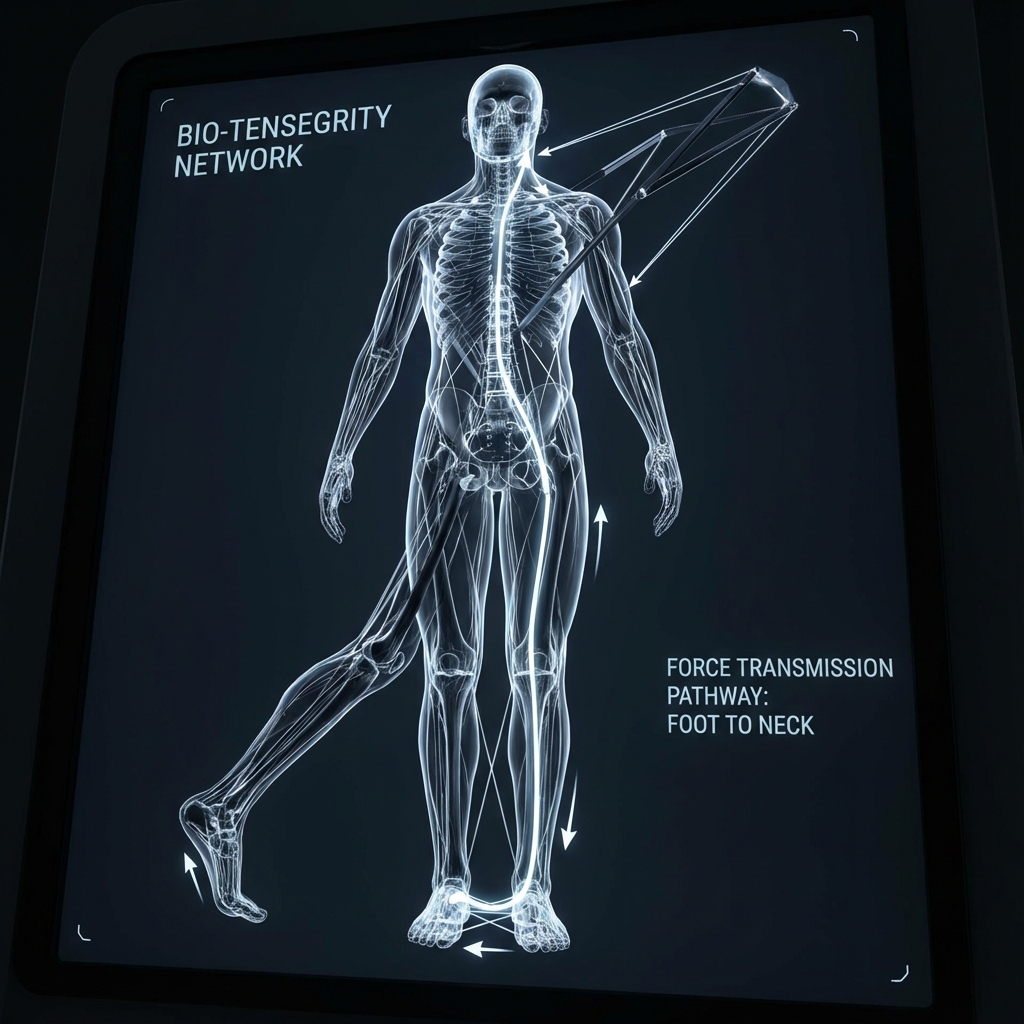
Science used to throw away the white, sticky "packing material" around muscles. Now we know it is the main event.
Fascia is a piezoelectric network. It generates electricity when stretched.Trauma is often stored not in the brain, but in the fascia ("The Body Keeps the Score").
When you hold a pose for 3 minutes (Yin Yoga), you are not stretching muscle; you are remodeling the connective tissue lattice, releasing trapped kinetic energy.
The Inheritance of Perspective
We think of the body as a car we drive. Yoga teaches that the body is the antenna. If the antenna is bent (poor posture, tight fascia), the signal (Consciousness) comes in with static. Asana tunes the receiver.
---
[!WARNING]
Clinical Context: Hypermobility & Injury
>
1. Ehlers-Danlos: People with loose connective tissue (Hypermobility) are drawn to yoga because they are "good at it." They are at high risk of joint destabilization. They need strength (Pingala), not more stretching.
2. The Ego: The most dangerous thing in a yoga class is the desire to look like the person next to you. "Comparison is the thief of joy" and the cause of a torn meniscus.
3. Neck Safety: Inversions (Headstand/Shoulderstand) place axial load on the cervical spine (C1-C7), which is designed to hold a 10lb head, not a 150lb body. Stroke risk (Vertebral Artery Dissection) is non-zero.