The Naked Warriors
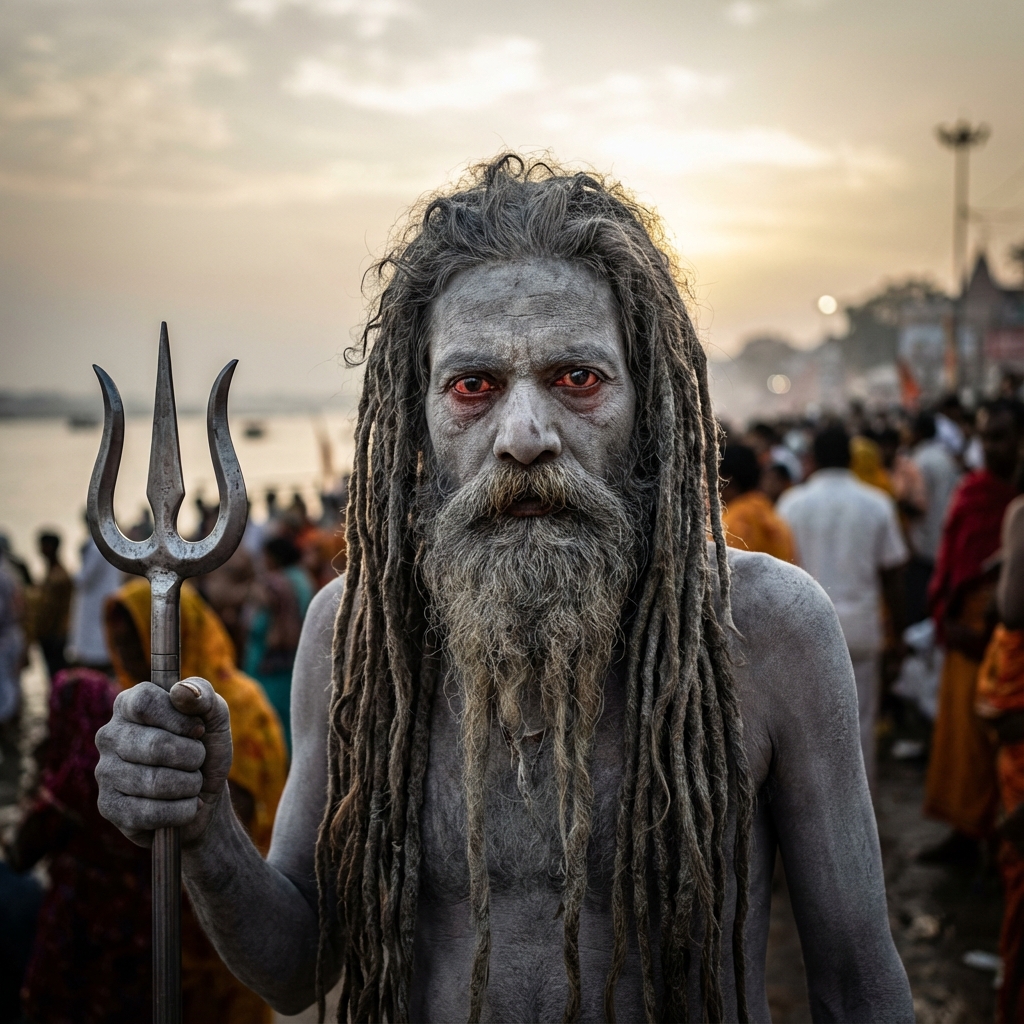
The Soldiers of Sanatana Dharma
When we think of "Yogis," we often imagine peaceful meditators. The Naga Babas contradict this image. They are Warrior Ascetics.
Founded by Adi Shankaracharya in the 8th Century CE, the Naga (Dashanami Sampradaya) Akhadas were established not just to meditate, but to defend the Dharma. At a time when Indian culture was facing external invasions, Shankaracharya organized the Sadhus into regiments (Akhadas). He gave them tridents (Trishul) instead of walking sticks.
They are the "Naked Warriors" (Naga means Naked). They renounce clothing to signify their freedom from social conditioning; their only armor is the ash of the cremation ground.
The Great Resistance
Throughout history, the Nagas have fought actual wars.
- The Battle of Gokul (1757): When Afghan forces attacked the holy city of Gokul, 4,000 Naga Sadhus, fueled by religious fervor (and the sacrament), decimated the invading army of 30,000 soldiers.
- The Sannyasi Rebellion (1760-1800): They waged a 40-year guerilla war against the British East India Company. The British feared them so deeply that they categorized wandering yogis as "Thugs" and criminalized their existence.
Digambara: Clad in the Sky
Why naked?
In Western psychology, clothing is the first layer of the "Persona" (Mask). It defines status, gender, and belonging.
The Naga rejects this. By stripping naked, they make a radical declaration: "I am not this body. I have nothing to hide. I am the sky itself."
This nudity is not sexual. It is a test of transcending shame and bodily identification. To stand naked in the freezing Himalayas or the scorching plains requires a mastery of the autonomic nervous system (Tapas).
The Bond with the Plant
For the Naga, Cannabis is not a pastime; it is a Ration.
Just as a soldier receives rations, the Naga receives his Chillum. It allows them to:
1. Endure Extremes: The analgesic and thermoregulatory effects help them survive extreme cold and heat.
2. Dissociate from Pain: Essential for their extreme austerities (Hatha Yoga Pradipika).
3. Focus Intent: It fuels the "One-Pointedness" needed for martial and spiritual discipline.
They do not hide their usage. They smoke openly, defiantly, as a sacrament to their Lord Shiva, challenging the puritanical norms of society.