The Wiring
The Autonomic Balance
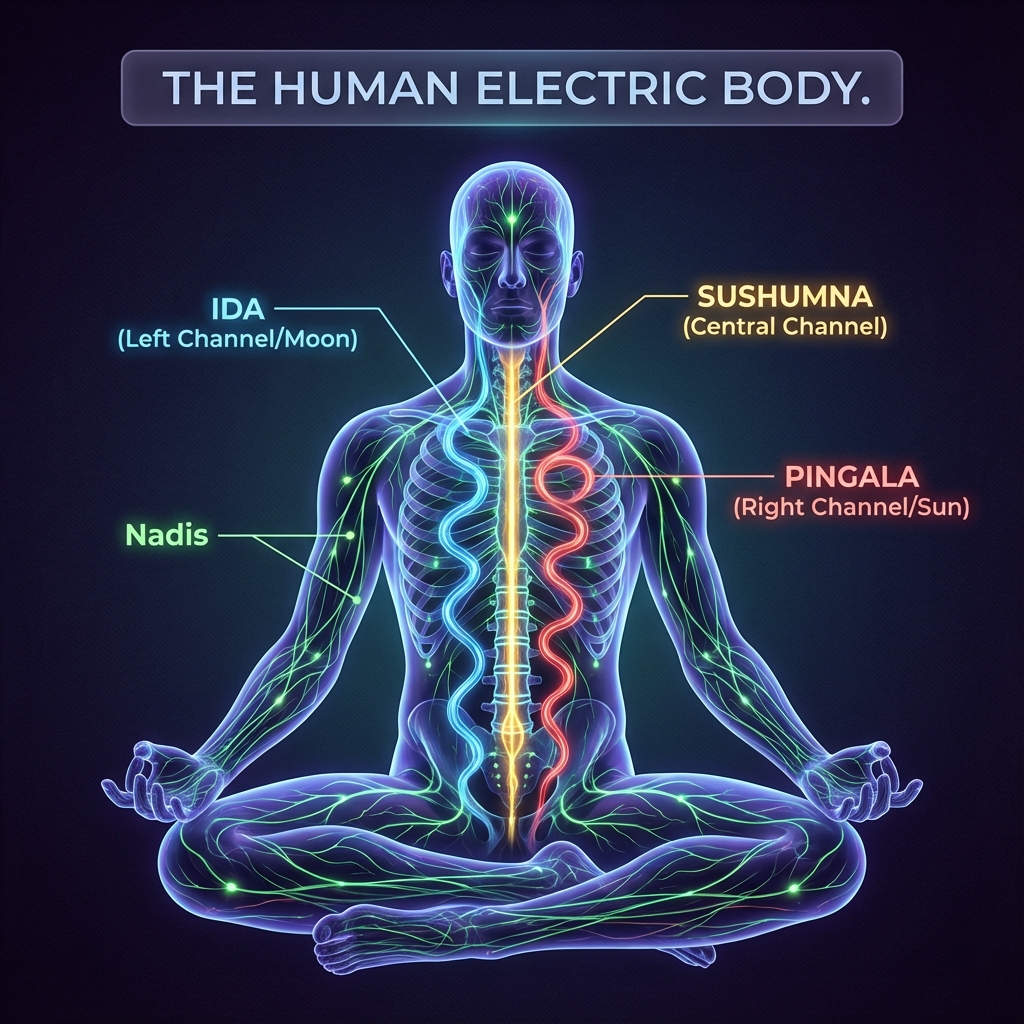
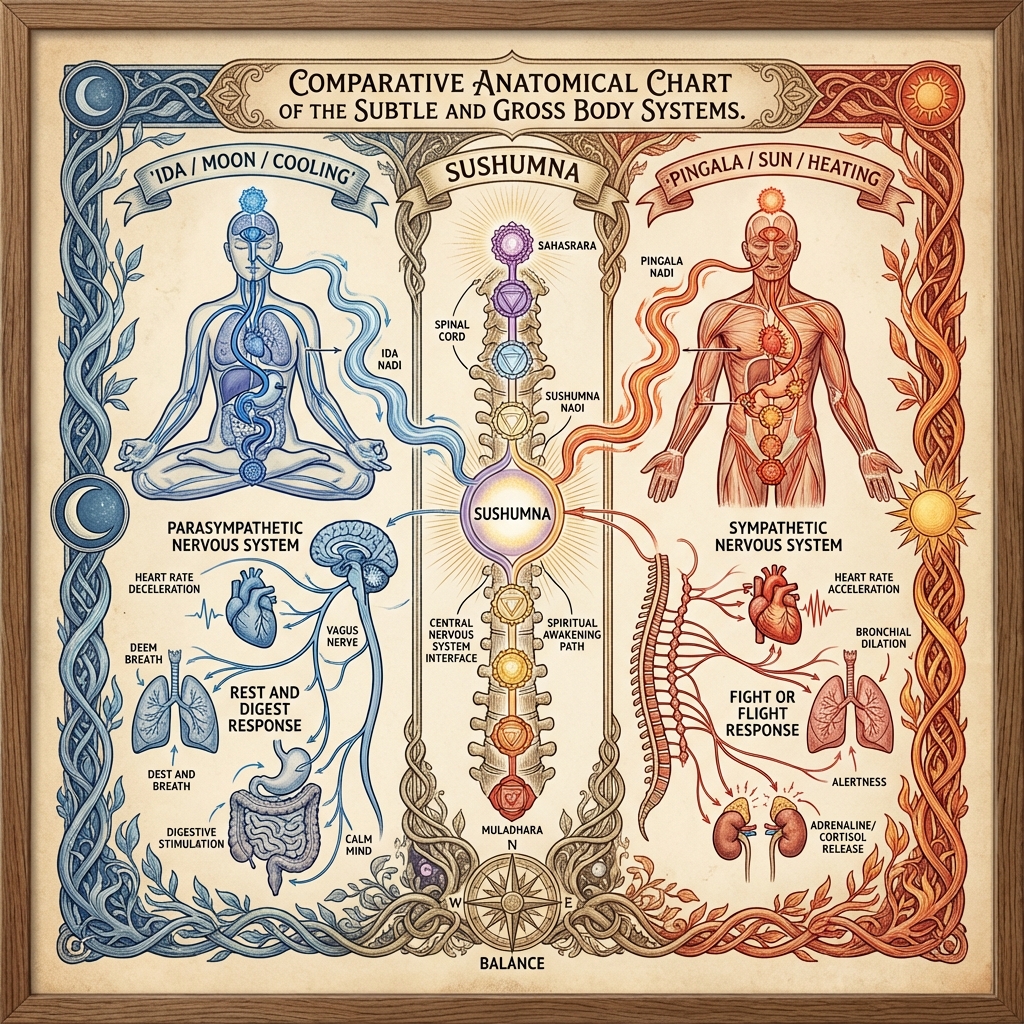
The Yogic model describes two primary channels that coil around the spine: Ida and Pingala.
Modern anatomy describes two branches of the Autonomic Nervous System: Parasympathetic and Sympathetic.
They are the same thing.
The ancients didn't have cadavers; they had introspection. They felt the current.
1. Pingala (The Sun)
- Location: Right Nostril. Right Side of Body. Left Brain (Logic).
- System: Sympathetic Nervous System (SNS).
- Function: "Fight or Flight." It releases Adrenaline and Cortisol. It accelerates the heart, dilates pupils, and shuts down digestion. It is Solar, heating, and active.
- Modern Pathology: We live in chronic Pingala dominance (high stress, anxiety, burnout).
2. Ida (The Moon)
- Location: Left Nostril. Left Side of Body. Right Brain (Intuition/Emotion).
- System: Parasympathetic Nervous System (PNS).
- Function: "Rest and Digest." It releases Acetylcholine. It slows the heart, stimulates digestion, and enables immune repair. It is Lunar, cooling, and passive.
The Nasal Cycle
You do not breathe through both nostrils equally.
Every 90-120 minutes, erectile tissue in your nose swells, closing one nostril and opening the other.
This is an Ultradian Rhythm.
- Right Nostril Open: Your body is priming you for action (Sympathetic).
- Left Nostril Open: Your body is forcing you to rest (Parasympathetic).
By observing your breath, you can read the state of your nervous system in real-time.
The Inheritance of Perspective
Health is not about being "relaxed" all the time. It is about Autonomic Flexibility. The ability to toggle instantly between high-voltage action and deep restoration. Disease is rigidity—getting stuck in the "ON" position (Anxiety) or the "OFF" position (Depression).
---
[!NOTE]
Clinical Context: Heart Rate Variability (HRV)
>
1. The Metric: We can measure the balance between Ida and Pingala using HRV.
2. High HRV: Your heart rate speeds up on inhale (Pingala) and slows down on exhale (Ida). The gap is wide. This indicates a responsive, healthy nervous system.
3. Low HRV: The heart beats like a metronome (steady stress). This is a leading indicator of mortality and chronic disease.
4. Training: Resonance Breathing (6 breaths/minute) is the fastest way to increase HRV.