The Cartesian Split
In the 17th century, a French philosopher named René Descartes made a distinction that would define the next four centuries of Western medicine. He declared famously: "Cogito, ergo sum" (I think, therefore I am).
But his more consequential move was to categorize reality into two distinct substances: Res Extensa (extended matter, the body) and Res Cogitans (thinking substance, the mind). This is known as Cartesian Dualism.
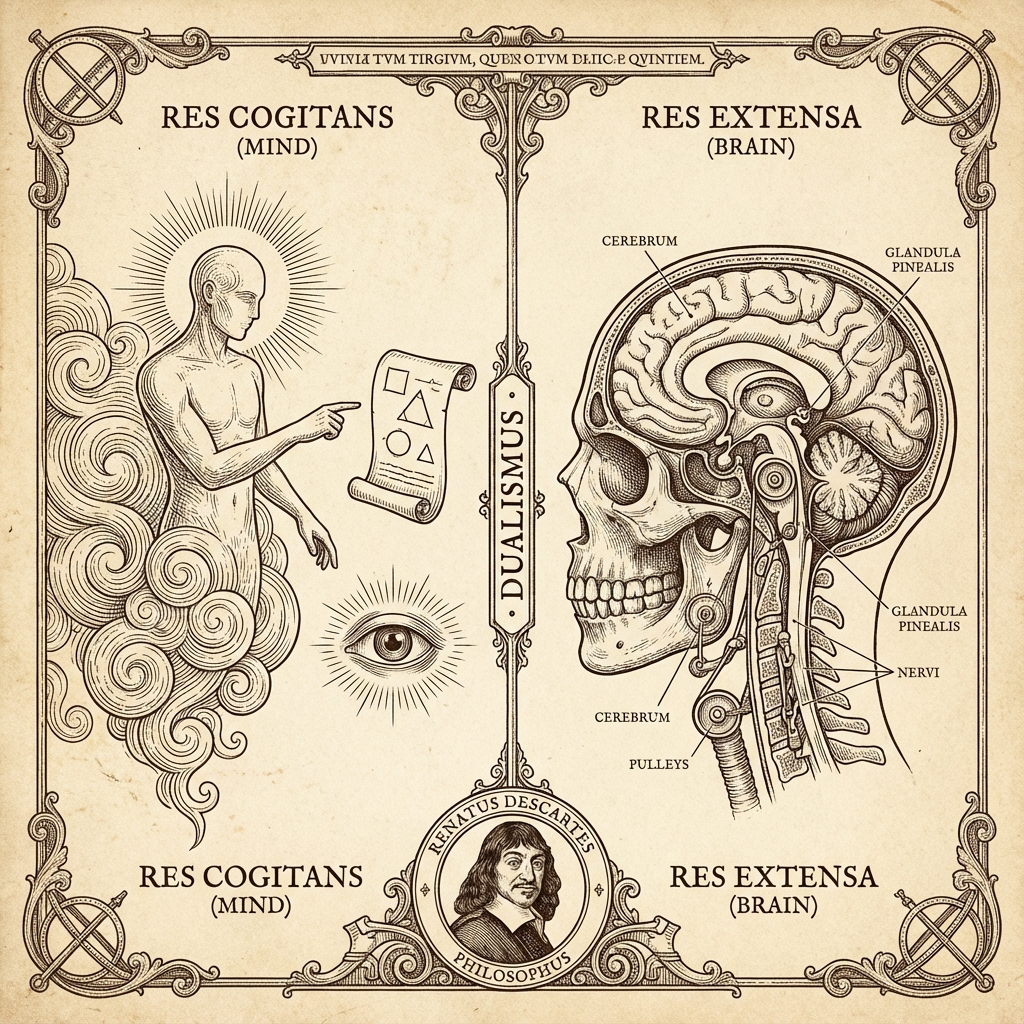
FIG 1.1: The separation of Res Cogitans and Res Extensa.
The Ghost in the Machine
This separation was politically convenient at the time—it allowed the church to retain dominion over the "soul" while allowing scientists to dissect the "body." But it created a disastrous divide in medicine. It taught us to treat the body as a machine (mechanistic materialism) and the mind as a ghost floating somewhere nearby.
The Materialist Trap
As science progressed, Dualism gave way to Reductive Materialism. The mind was dismissed entirely as an illusion. Depression became just "low serotonin." Anxiety became just "high cortisol." We started treating the brain like a car engine—just add oil (SSRIS) and it should run.
But the brain is not a car engine. It is a complex adaptive system. It creates its own reality. When we ignore the subjective experience (the "ghost"), we fail to treat the patient. We just numb the machine.
The institutional consequences of this simplistic view are what we inherited in the form of the Asylum.