The Physiology of Resilience
Heart Rate Variability (HRV) is the gold standard metric for autonomic flexibility. A healthy heart does not beat like a metronome; the interval between beats varies constantly. High HRV indicates a robust Parasympathetic Nervous System (PNS), capable of adapting to stress. Low HRV creates a rigid, reactive system prone to anxiety and burnout.
Resonance Frequency Training
There is a specific breathing rate—unique to each individual (typically between 4.5 and 6.5 breaths per minute)—that maximizes Respiratory Sinus Arrhythmia (RSA). This is the "Resonance Frequency."
By breathing at this exact frequency, we synchronize the respiratory, cardiovascular, and blood pressure rhythms (baroreflex), creating a high-amplitude coherent wave in the autonomic nervous system.
Clinical Application
Biofeedback creates a real-time "mirror" for the nervous system. Sensors measure:
- HRV (SDNN / RMSSD): The primary training metric.
- Skin Conductance (GSR): Measuring emotional arousal via sweat gland activity.
- Peripheral Temperature: Indicating vasoconstriction (stress) vs. vasodilation (relaxation).
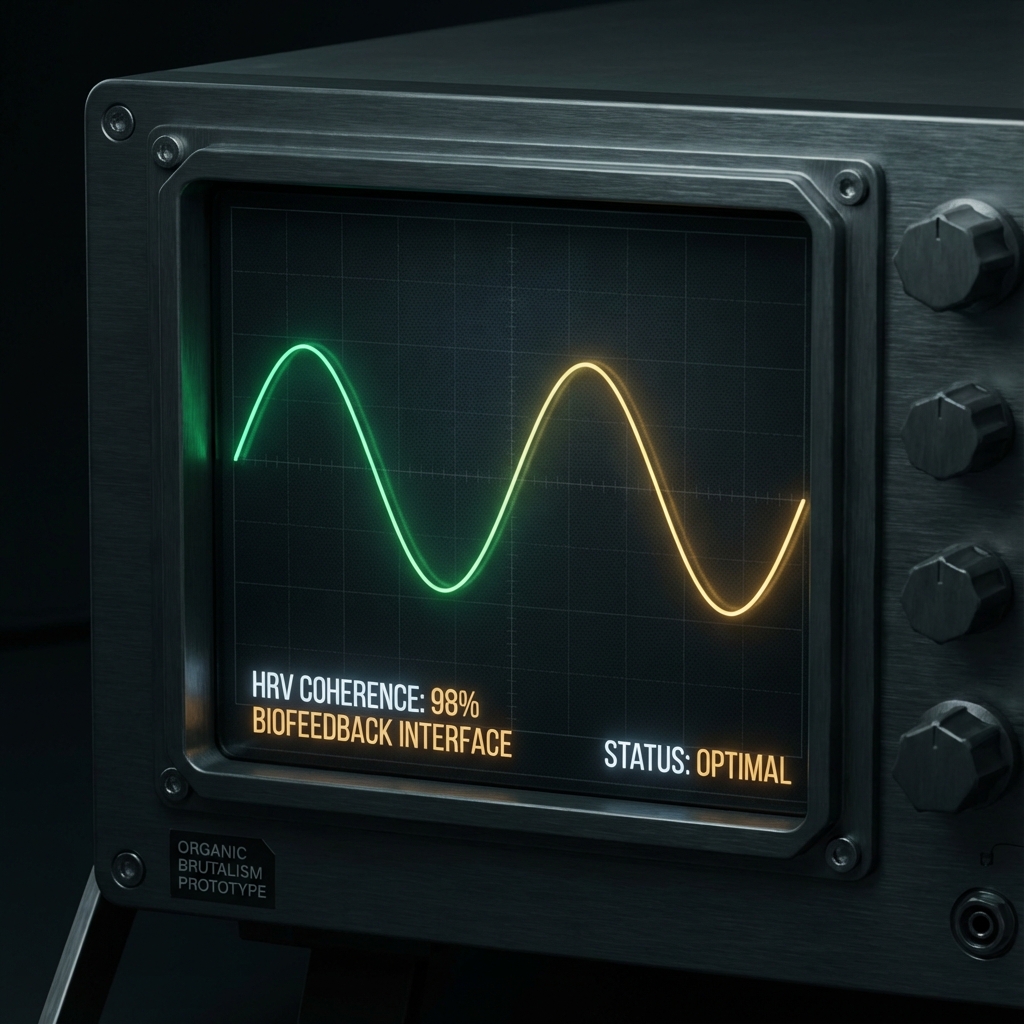
[ TARGET: 0.1 Hz ] Resonance Frequency Achieved