The Encoding Error
PTSD is a failure of memory consolidation. During a traumatic event, the high levels of adrenaline prevent the Hippocampus from properly "timestamping" the memory as past. Instead, the Amygdala traps the sensory data in a "hot" state. This means when a trigger occurs (e.g., a loud noise), the brain does not recall the memory; it relives it as a present threat.
Hippocampal Atrophy
MRI studies confirm that chronic PTSD patients exhibit physical shrinkage of the Hippocampus. This atrophy impairs the ability to distinguish safety from danger, leaving the patient in a permanent state of hyper-vigilance.
The Protocol: Reconsolidation Window
Memory is malleable when recalled. By administering NMDA antagonists (Ketamine) during targeted exposure, we can disrupt the protein synthesis required to "re-save" the traumatic emotional payload.
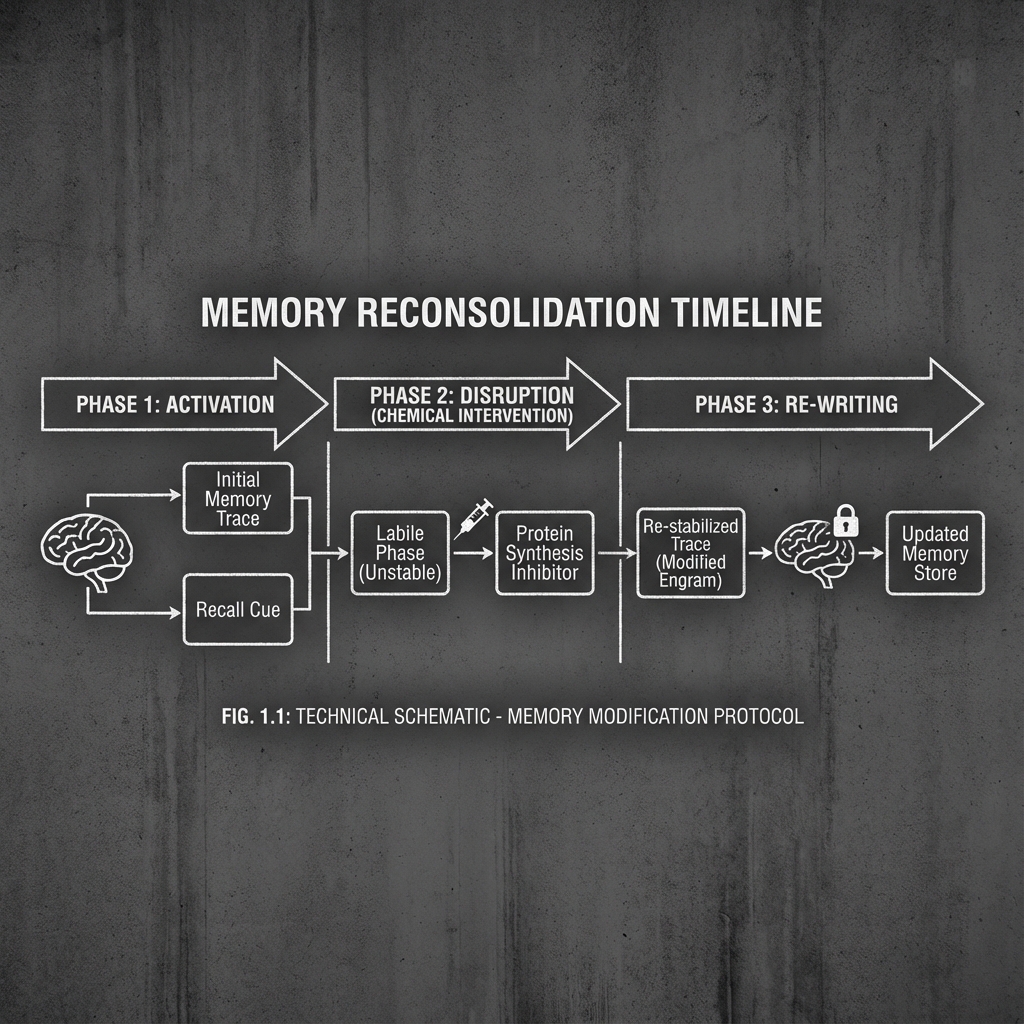
1. Activation: The traumatic memory is briefly reactivated in a controlled setting.
2. Disruption: Ketamine blocks the reconsolidation of the "fear" component (amygdala activation) while preserving the narrative memory.
3. Re-writing: The memory is re-stored as a neutral historical event, stripped of its autonomic power.